research
Restaurant Reviews Mention Overcharging 10x More Often Than Retail, Study Finds
By Octa Insights, Research Desk, Octabiz
· 10 min read
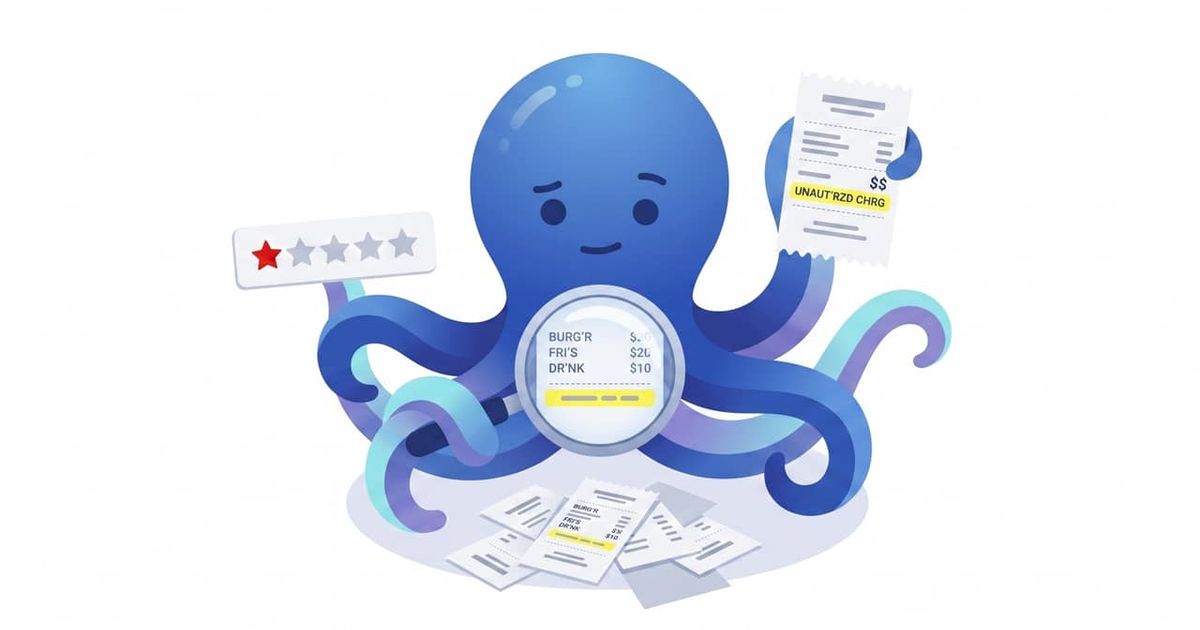
We read 3,319 Google reviews for 600 small businesses. Restaurants had 10x more billing complaints than retail.
Anyone who runs a restaurant, hotel, retail store, or home-service business knows customers will tell you exactly what they think in a Google review. We wanted to know: how often does that feedback include a billing or overcharge complaint, and does it vary by industry?
So we collected 600 U.S. small-business listings from Google Maps, 150 each across restaurants, hotels, retail stores, and home-service companies (plumbers, electricians, and similar), and read a sample of their most-relevant Google reviews for mentions of being overcharged or billed incorrectly.
:::takeaways title="The short version"
- We read 3,319 real Google reviews across 600 U.S. small businesses in four industries.
- More than half the restaurants we sampled had at least one review about a wrong or confusing bill.
- Retail stores had almost none, and their star ratings were nearly the same, so this isn't just restaurants being worse overall.
- Restaurants sit in a regulatory gap: the federal junk-fees rule leaves food service out, and state rules differ.
- Most billing complaints describe ordinary back-office slips a good till and clean invoicing catch before the bill reaches the table. :::
:::term word="billing complaint" A review where the customer says they were charged the wrong amount: a double charge, a price that did not match the menu, a fee they did not expect, or a deposit that was never returned. :::
The headline number
Of the 40 restaurants in our review sample, 21 (52.5%) had at least one review describing a billing or overcharge problem. That's roughly ten times the rate we found in retail stores, where only 1 of 37 sampled (2.7%) had such a review. Hotels came in at 15.0% (6 of 40), and home services at 5.4% (2 of 37).
:::stats title="What we found"
- 52.5% | of restaurants had at least one billing complaint
- 15.0% | of hotels had at least one
- 5.4% | of home-service firms had at least one
- 2.7% | of retail stores had at least one :::
| Sector | Businesses sampled | With ≥1 billing-complaint review | Rate |
|---|---|---|---|
| Restaurants | 40 | 21 | 52.5% |
| Hotels | 40 | 6 | 15.0% |
| Home services | 37 | 2 | 5.4% |
| Retail | 37 | 1 | 2.7% |
| All sectors | 154 | 30 | 19.5% |
:::chart type="bar" title="Billing complaints by sector" label="Chart" caption="Share of the businesses we sampled that had at least one review describing a billing or overcharge problem." source="Octabiz review study, 154 businesses, 2026"
- Restaurants | 52.5% | 21 of 40 sampled
- Hotels | 15.0% | 6 of 40 sampled
- Home services | 5.4% | 2 of 37 sampled
- Retail | 2.7% | 1 of 37 sampled :::
:::chart type="donut" title="Where the complaints came from" label="Chart" caption="Of the 30 businesses with at least one billing complaint, seven in ten were restaurants."
- Restaurants | 21 | businesses
- Hotels | 6 | businesses
- Home services | 2 | businesses
- Retail | 1 | business :::
The ratings are almost the same either way
The gap isn't explained by restaurants simply running worse operations. Restaurants and retail stores in our sample had nearly identical average star ratings: 4.42 for restaurants versus 4.31 for retail. So whatever's driving the billing-complaint gap, it isn't general dissatisfaction spilling over into every category of complaint.
:::compare beforeLabel="Retail: 2.7%" afterLabel="Restaurants: 52.5%" Average rating 4.31. One price, one scan, one receipt: the number on the shelf is the number on the till.
Average rating 4.42, near-identical happiness, twenty times the billing complaints. Split checks, modifiers, service fees and hand-keyed totals all happen after the guest has stopped watching. :::
What the complaints actually said
We didn't just count keyword matches. We read every one of the 45 reviews that matched our billing-related search terms individually before counting it, and excluded 6 as false positives, including reviews that used phrases like "no hidden fees" as praise, and one review that blamed a third-party booking site rather than the business itself. That left 39 validated billing and overcharge complaints across 30 businesses.
Some examples of what made the cut: a diner charged twice for a side dish that never arrived, a customer who found a menu price didn't match what showed up on the final bill, and one hotel, DoubleTree by Hilton Boston North Shore, that had four separate billing-complaint reviews in our sample alone, covering a room-rate overcharge, a food-and-beverage credit dispute, and a deposit dispute.
:::note title="A mistake caught fast is not a lost customer" About 12.8% of the complaint reviews (5 of 39) still gave 4 or 5 stars. In every one of those cases the reviewer said the business spotted the overcharge, fixed it on the spot, and the evening carried on. :::
Why restaurants specifically? A regulatory gap may be part of the answer
Restaurant billing has drawn national attention as surcharges and service fees have become more common since the pandemic. But restaurants sit in an unusual regulatory position: the FTC's final "junk fees" rule, which took effect in 2025 and requires businesses to show the full price up front, explicitly does not cover restaurants. It applies to live-event tickets and short-term lodging, not food service (Restaurant Dive, "FTC excludes restaurants from junk fee rule").
:::quote author="Lina M. Khan" role="Then-Chair, U.S. Federal Trade Commission" People deserve to know up-front what they're being asked to pay, without worrying that they'll later be saddled with mysterious fees that they haven't budgeted for and can't avoid. :::
With no federal disclosure standard specific to restaurants, oversight has fallen to a patchwork of state laws. California, Illinois, Colorado, and, starting July 2026, Florida have all passed or expanded rules requiring restaurants to clearly disclose mandatory surcharges and service fees (Restaurant Business, "California and Illinois are cracking down on restaurant surcharges and hidden fees"; Baker Hostetler, "Florida Expands Mandatory Fee Disclosure Requirements for Restaurants").
:::term word="surcharge" An extra percentage added to the bill on top of the food and drink, often labelled a service charge, kitchen fee, or wellness fee. It is not a tip, and the rules on how plainly you must show it depend on your state. :::
Restaurants also aren't backing away from surcharges. They're leaning in. In the National Restaurant Association's own 2026 research, most operators who've added a surcharge say it's here to stay:
:::quote author="National Restaurant Association" role="Operators find ways to offset higher costs, 2026" 75% of the restaurants who are adding a surcharge expect to keep that policy for more than a year. :::
More surcharges, uneven disclosure rules from state to state, and no federal floor specific to restaurants is a plausible combination for exactly the kind of billing confusion our review data is picking up.
:::warning title="What this study does not prove" We measured complaints, not causes. Our data shows where customers say bills went wrong; it cannot show which surcharge, till setting or staffing decision created each one. Treat the regulatory picture above as context, not as a tested finding. :::
Why this matters for small business owners
Billing accuracy is one of those things customers rarely praise but reliably complain about when it goes wrong. And unlike food quality or service speed, it's largely a back-office problem. A wrong item ring-up, a stale menu price, a surcharge that isn't clearly itemized, or a manually calculated split check are the kinds of errors that clean invoicing and point-of-sale systems are built to catch before the bill ever reaches the table.
:::steps title="Four things to check this week"
- Match the menu to the till | Print yesterday's menu next to your item prices and fix every line that disagrees. Stale prices were the single most common complaint we read.
- Put fees on the menu, not the bill | If you add a service charge, say so where guests order, in the same size type as the prices.
- Let the system split the check | Hand arithmetic at a busy table is where double charges are born. Split by seat or item in the till instead.
- Read your own reviews for money words | Search your Google reviews for "charged", "fee", "refund" and "bill" once a month. It takes ten minutes and tells you what to fix. :::
How we ran this study
We collected 600 U.S. business listings from Google Maps across four sectors on August 17, 2026. For a 160-business subsample (40 per sector), we pulled up to 25 of each business's most-relevant reviews, 3,319 reviews in total, and searched them for billing-related keywords, then read every match by hand to rule out false positives.
:::note title="Known limits" Google reviews skew toward strong experiences, our subsample is 154 businesses after exclusions, and keyword search can only find complaints that customers chose to write down. The real rate of billing errors is almost certainly higher than the rate of reviews about them, in every sector. :::
:::cta title="See every charge before the guest does" href="/pos" label="Explore the Octabiz till" Menu prices, fees and split checks stay in one place, so the bill that reaches the table is the one you meant to send. :::
How this looks inside Octabiz
We ran the same order through our own restaurant terminal to show what "no surprise charges" means in practice. Nothing below is a mock-up: these are screens from a live test restaurant.
:::video src="/blog/video/octabiz-restaurant-billing.mp4" poster="/blog/video/octabiz-restaurant-billing-poster.jpg" title="Watch the check, step by step (18 seconds)" caption="An 18-second walk-through of the same dine-in check: priced add-ons, the open check, the service charge shown before payment, and the printed receipt." :::
:::gallery title="How the bill is built, step by step" intro="Four screens from the ordering flow. Slide across to see each one, or tap a picture to see it bigger."
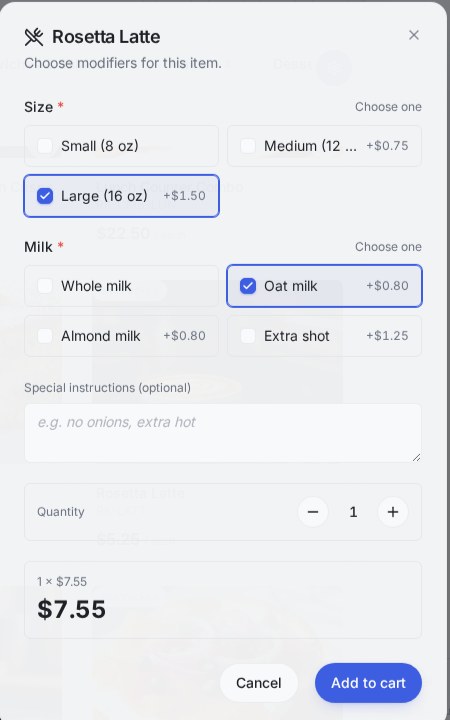 Every add-on is priced before the item reaches the bill, so the guest can be told the exact price while ordering.
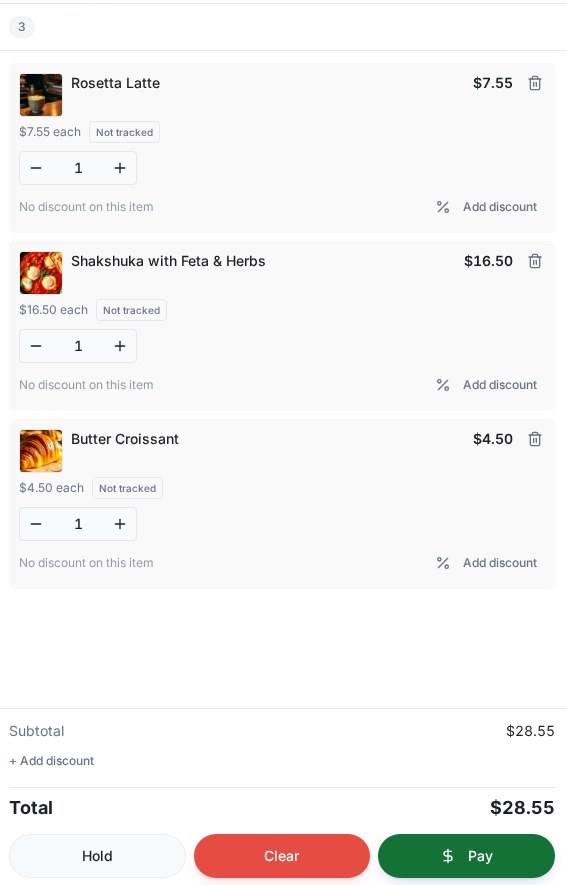 The open check lists each item at its own price, with the running subtotal always visible to the server.
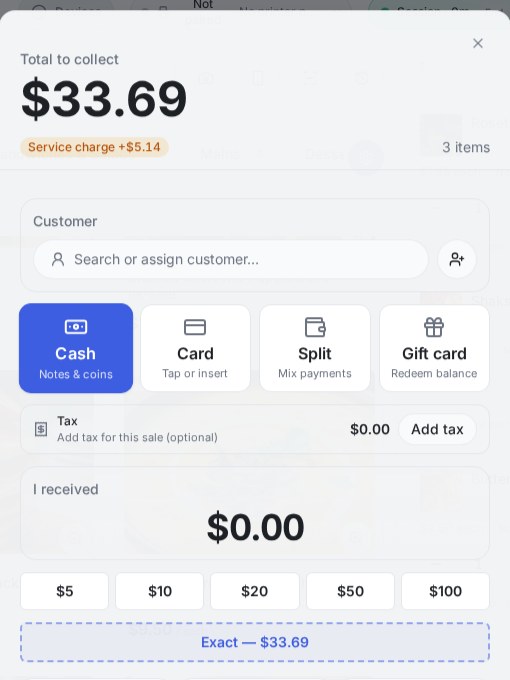 The service charge is shown on the payment screen before any money is taken.
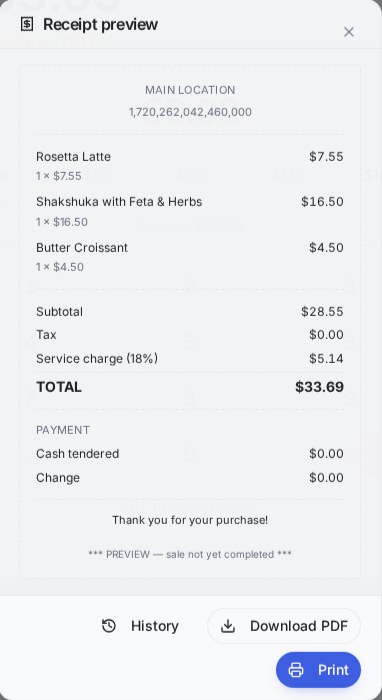 The printed receipt itemises the service charge on its own line, so the guest can check the total without doing sums.
:::
The printed receipt itemises the service charge on its own line, so the guest can check the total without doing sums.
:::
:::note title="What changed because of this study" While preparing these screenshots we found that our own receipt printed the service charge inside the total without a separate line. That is exactly the pattern guests complain about, so we fixed it: the charge now prints as its own labelled row with the percentage, on screen and on paper. :::
:::faq
What counted as a billing complaint?
A review where the customer said they were charged the wrong amount: a double charge, a price that did not match the menu, an unexpected fee, or a deposit that was not returned.
How many reviews did you actually read?
3,319 reviews across 154 businesses, with all 45 keyword matches read by hand. Six were thrown out as false positives.
Does this mean restaurants overcharge on purpose?
No. Most of what we read looks like ordinary slips: a stale price, a hand-split check, a fee that was never explained at the table.
Why are retail stores so much lower?
One item, one price, one scan. Restaurants add modifiers, split checks and service fees after the guest has stopped watching the number.
Where can I get the underlying numbers?
Email paul@octabiz.ai and we will send the full methodology, exclusions and dataset. :::
References
- FTC excludes restaurants from junk fee rule: Restaurant Dive
- Federal Trade Commission Announces Bipartisan Rule Banning Junk Ticket and Hotel Fees: FTC, Dec. 17, 2024
- California and Illinois are cracking down on restaurant surcharges and hidden fees: Nation's Restaurant News
- New law bans "hidden fees" at Colorado's restaurants starting in 2026: Denver Gazette
- Florida Expands Mandatory Fee Disclosure Requirements for Restaurants and Hospitality Businesses: Baker Hostetler
- The Rise of Junk Fee Class Actions: What Companies Should Know: Holland & Knight
- Operators find ways to offset higher costs: National Restaurant Association, 2026
Data and full methodology available on request at paul@octabiz.ai.