ux
Why We Need a New UX: The Classic Interface Is Nearly Dead. Is Jarvis Finally Coming for Small Business?
By Matthew Truth, Co-Founder, Octabiz
· 9 min read
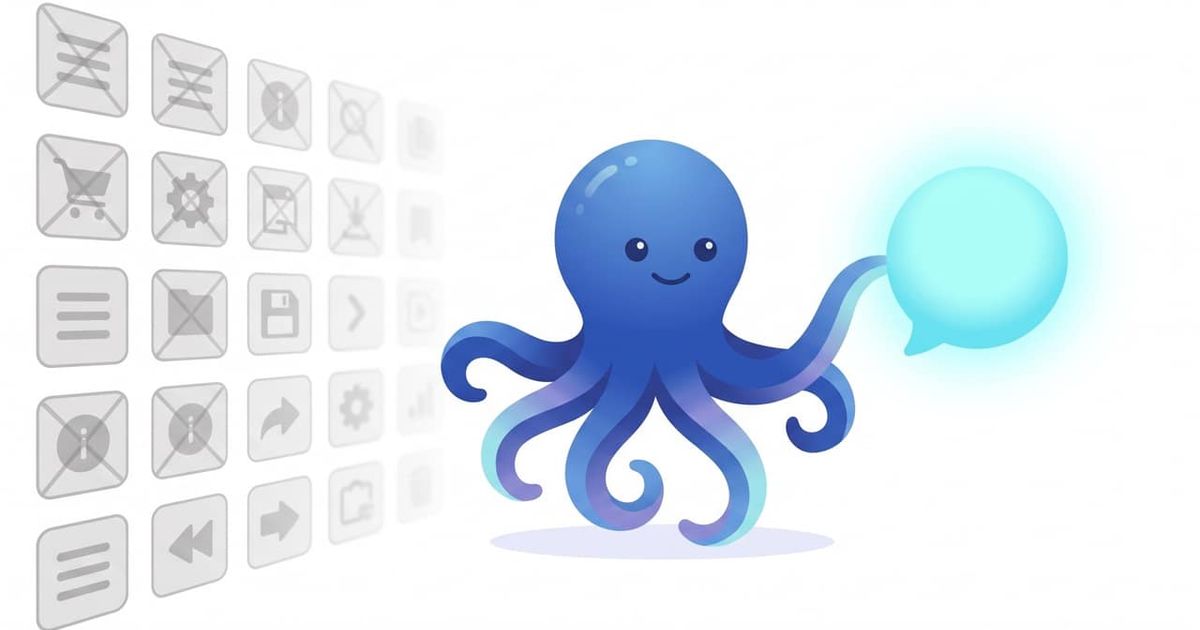
Why We Need a New UX: The Classic Interface Is Nearly Dead. Is Jarvis Finally Coming for Small Business?
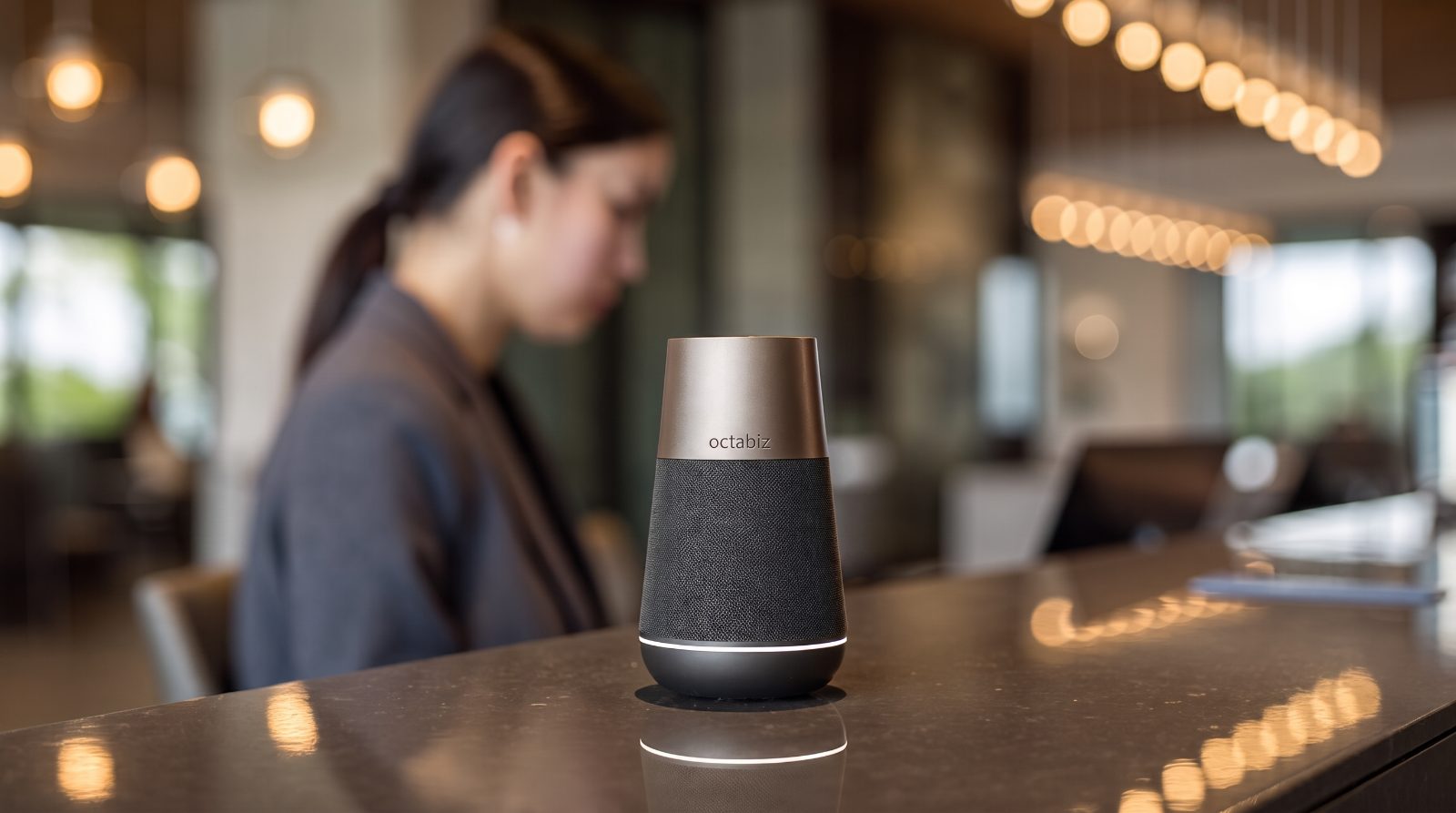
For forty years, "using software" has meant the same small ritual: open an app, hunt for the right screen, click through a menu, fill in a form, and hope you pressed the right button. That's the interface almost every business tool still runs on today. Ours did too, for a long time. It's called a graphical user interface, and it has been the default since the 1980s.
It's also, more and more, not how anyone actually wants to work.
:::takeaways title="The short version"
- Software has worked the same way for forty years: open an app, hunt for the screen, click, fill in a form.
- Researchers and market data now agree that model is ending. People want to ask for an outcome, not learn a layout.
- Small businesses are leading the change, not big companies.
- Octabiz already does this three ways: talk to it, type to it, or hand a job to an agent.
- Screens don't disappear. They just stop being the thing you have to think about. :::
:::term word="graphical user interface" The classic way of using software: windows, buttons and menus that you point at and click. It has been the standard since the 1980s. :::
The signs that the classic UI is aging out
The people who spent their careers building that interface are the ones now saying its era is ending.
Jakob Nielsen
Jakob Nielsen, one of the most influential voices in the history of user-experience design and co-founder of the field's most-cited research group, put it bluntly in a piece titled "The End of UI: How AI Agents Will Replace Human-Computer Interaction As We Know It": agentic AI is "certainly reshaping the digital" world, and traditional interfaces built for point-and-click, menu-driven interaction are being challenged at the root.

Pete Trainor
Writer and design researcher Pete Trainor made a similar case: "Agentic AI systems now challenge the deepest assumptions embedded in interface-centric thinking, and not because interfaces disappear entirely, but because interaction itself changes character." We are shifting, in his words, from clicking through screens to "expressing intent, delegating outcomes, and collaborating with semi-autonomous systems."

:::quote author="Jakob Nielsen" role="Co-founder, Nielsen Norman Group" The end of UI: AI agents will replace human-computer interaction as we know it. :::
:::term word="agentic AI" Software that can carry out a whole task for you, not just answer a question or show you where the button is. :::
The market data backs up what the design world is arguing. Gartner projects that 40% of enterprise applications will feature task-specific AI agents by the end of 2026, up from under 5% a year earlier, a jump from rounding error to mainstream in about eighteen months.
:::chart type="bar" title="Business apps with built-in AI agents" label="Chart" max="45" caption="Gartner's projection: from a rounding error to four in ten apps in about eighteen months." source="Gartner, 2026"
- Early 2025 | 5%
- End of 2026 | 40% :::
And it isn't the big enterprises driving this. In G2's 2025 State of AI survey of more than 1,400 verified reviews, businesses with fewer than ten employees were the single largest group of AI voice assistant users, bigger than the enterprise segment. Small shops didn't wait for a procurement committee to bless the technology. They picked it up because it solved a real problem: most owners don't have the time, the patience, or a spare hire to babysit software with forty menus and a manual.
:::stats title="The numbers behind the shift"
- 27% | yearly growth in the voice assistant market
- 88% | of voice platforms report adoption rising fast
- 71% | of shoppers use a voice assistant before they buy :::
What "the old UI" actually costs a small business owner
Sit with a restaurant owner, a hotel manager, or a home-services operator for an hour and the same thing surfaces again and again: the software isn't the job. Running the business is the job. Every minute spent digging through a settings menu to issue a refund, or clicking through five screens to check yesterday's labor cost, is a minute stolen from the real work of serving guests, running a crew, and keeping the doors open.
Classic UI was built on a reasonable assumption for its time: that a person has the hours to learn where everything lives, and uses the software often enough for the layout to become second nature. That assumption falls apart for most small-business owners. They're juggling five jobs at once and touching their back-office software in short, interrupted bursts, not settling in for a focused session at a desk.
Enter the "Jarvis" model
So what would they rather have? Ask most people to picture an ideal computer assistant and, consciously or not, a lot of them describe something like Jarvis, the AI from the Iron Man films that Tony Stark never had to click through a menu to reach. You talk to it. It understands context. It goes and does the thing.
That's not science fiction anymore; it's a live product category. Voice AI inside businesses has moved from experiment to, in G2's words, "how modern businesses communicate... at scale." Customers are already there too: in retail, 71% of shoppers say they ask a voice assistant about a product before they buy it. Everywhere researchers look, the pattern holds. People don't want an interface. They want an outcome, and they want to ask for it in plain language.
That's the bet behind Octabiz's AI surfaces, and it's a specific one. Most "AI features" bolted onto business software are really just a chatbot sitting on top of the same old menus, a search bar for the same buttons, in the same maze. That doesn't save you a click. Octabiz's Voice Assistant, AI chat, and AI agents are built to finish the job, not point you toward it.
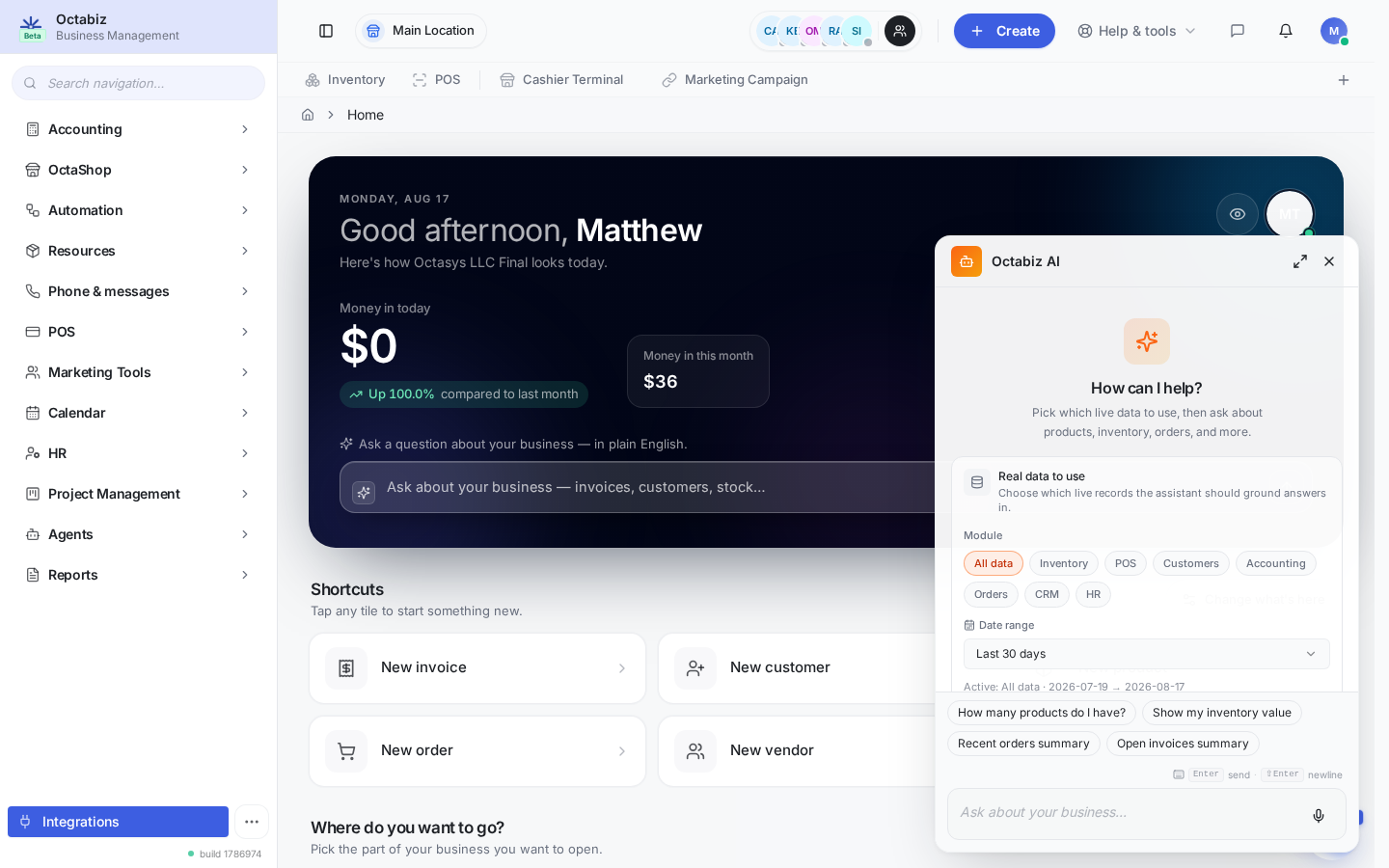
:::figure src="https://api.octabiz.ai/storage/v1/object/public/landing-page-assets/blog/jarvis-2026/chat-assistant-v2.png" alt="The Octabiz AI chat assistant, asking what you want to work on in plain language instead of showing a menu" caption="Octabiz AI chat: one plain-language question instead of five screens." :::
:::compare beforeLabel="The old way" afterLabel="The Octabiz way" Open the app, find the right screen, click through a menu, fill in a form, hope you pressed the right button. Five screens just to check yesterday's numbers.
Say it once, in plain language: "close out table 12." The work is done, and no screen was needed. :::
:::steps title="Three ways in"
- Say it | Talk to the Voice Assistant: "what's tomorrow's staffing look like." It answers and acts.
- Type it | Loud kitchen, or a quiet front desk at 11pm? Type the same request into AI chat and get the same result.
- Hand it over | Give a bigger job to an AI agent and it runs in the background, then comes back with the outcome. :::
:::video src="/blog/video/talk-to-your-business.mp4" poster="/blog/video/talk-to-your-business-poster.jpg" title="See it in Octabiz (24 seconds)" caption="A short film of the real product: asking a plain question on the home screen, the answer coming back with its own numbers, the Voice Assistant, the shop assistant customers can talk to, and the agents that take the bigger jobs." :::
Say it out loud to the Voice Assistant, live today: "close out table 12," "what's tomorrow's staffing look like," "refund the Tuesday order for the Garcia account," and it's done, no screen required. Type the same words into AI chat when talking isn't an option, and you get the same result. Or hand something bigger to an AI agent, reconciling the week's tips, chasing a missing vendor invoice, rebuilding tomorrow's schedule around a call-out, and it runs in the background and comes back with the outcome, not a link to where you could go build it yourself.
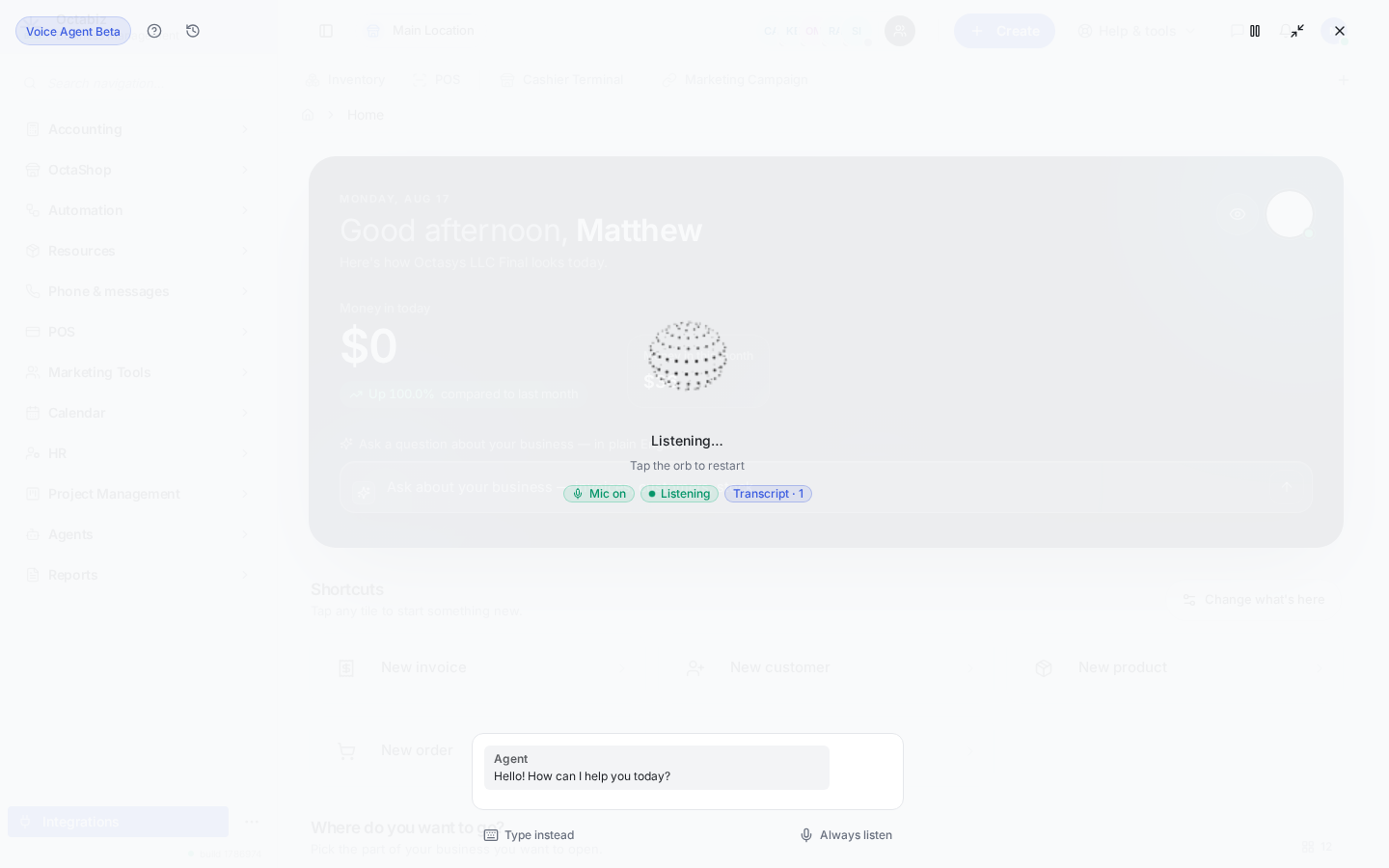
:::figure src="https://api.octabiz.ai/storage/v1/object/public/landing-page-assets/blog/jarvis-2026/voice-orb-v2.png" alt="The Octabiz voice assistant listening full-screen, with a live transcript of the conversation" caption="The Voice Assistant, live: tap once, talk, and watch the transcript as it works." :::
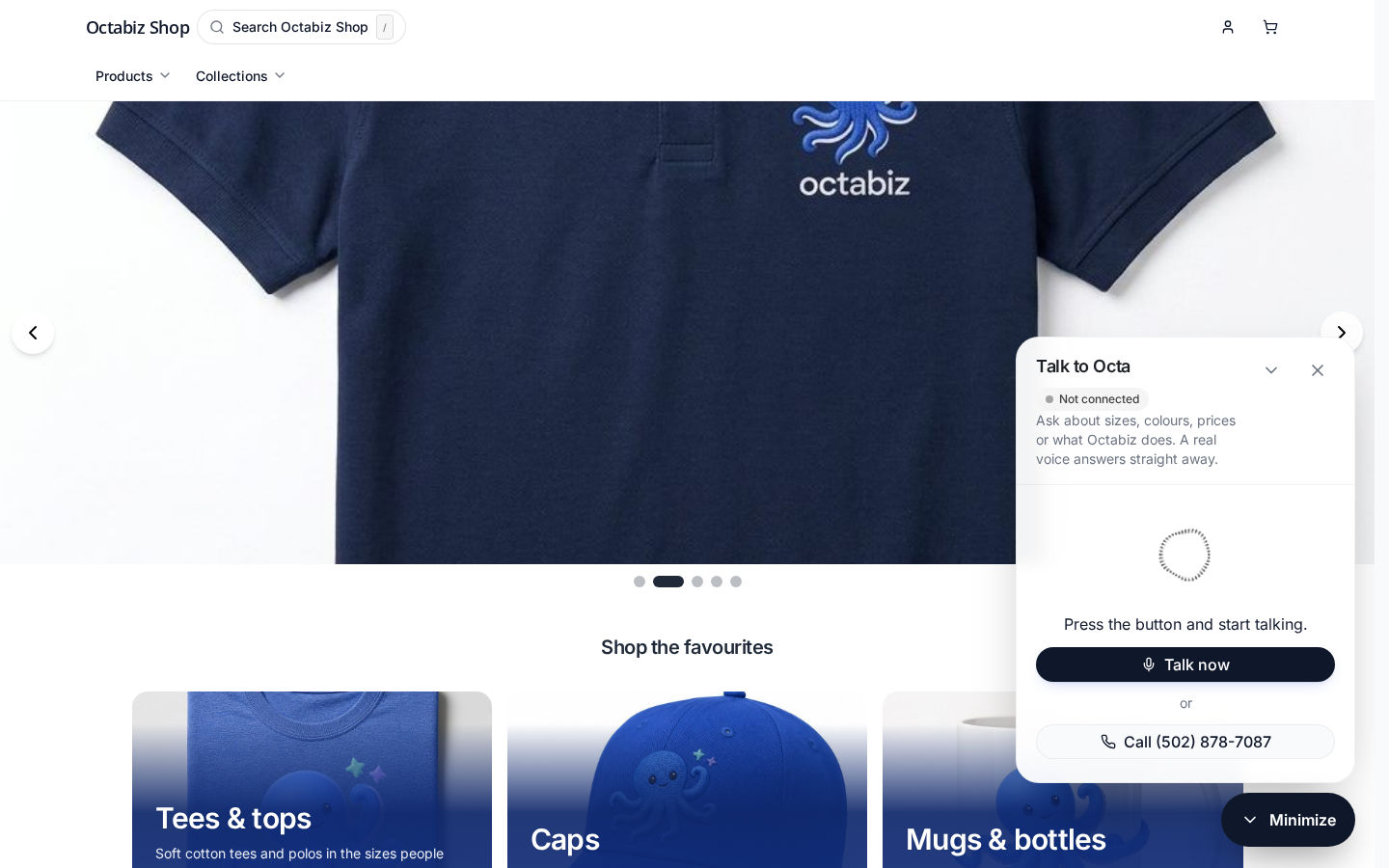
:::figure src="https://api.octabiz.ai/storage/v1/object/public/landing-page-assets/blog/jarvis-2026/octashop-talk-v2.png" alt="A shopper talking to the Octabiz Shop AI assistant from the storefront, with a call option" caption="The same idea, pointed at customers: a shopper asks about sizes and prices out loud, right on the store page." :::
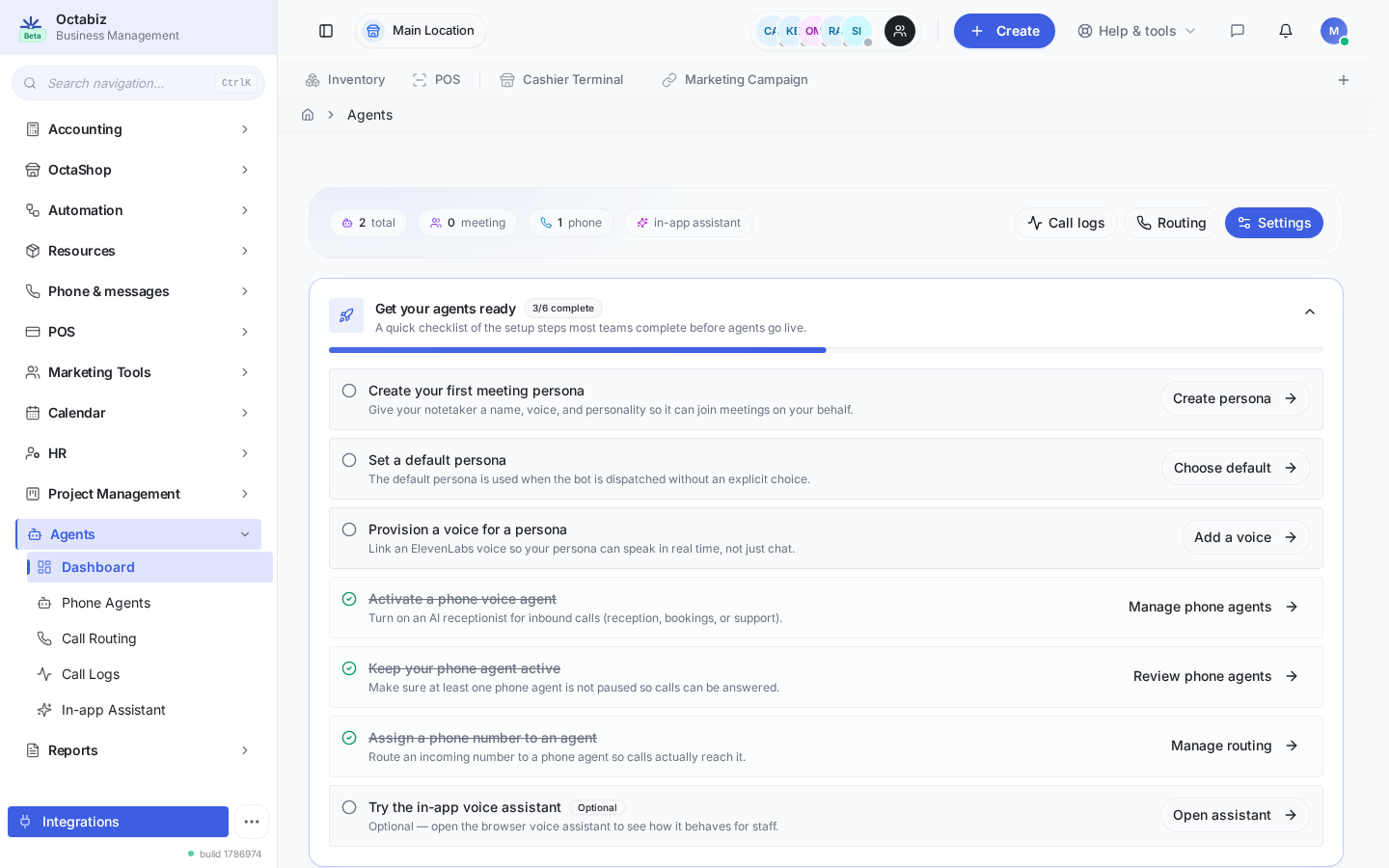
:::figure src="https://api.octabiz.ai/storage/v1/object/public/landing-page-assets/blog/jarvis-2026/agents-overview-v2.png" alt="The Octabiz Agents dashboard with a setup checklist for meeting, phone and in-app agents" caption="Behind the scenes: agents for meetings, phone calls and in-app help are set up from one checklist." :::
The honest caveat
:::warning title="Screens are not going away" Most people still want the option to fall back to a normal screen, or to a person, for anything unusual, sensitive or expensive. The goal is to let a conversation handle the routine 80%, and keep a clear screen for the rest. :::
None of this means every screen vanishes tomorrow, and it shouldn't. Even the most bullish voice-AI research finds that people still want a way to fall back to a human, or in software's case a traditional screen, for anything unusual, sensitive, or high-stakes. Nielsen's own point was never "delete the interface." It's that designers who keep approaching agentic systems with old interface habits will hit friction fast. The businesses that get this right won't be the ones that rip out every screen. They'll be the ones that let a conversation handle the routine 80% of requests and leave a clear, well-designed screen for the rest.
Where this goes next
Further than most small-business owners expect. The tools that win the next decade of small-business software won't be the ones with the most powerful settings menu. They'll be the ones you barely have to open at all, because you can just tell them what you need, the way you'd tell an employee, whether you type it, say it, or let an agent run with it, and trust that it gets done.
Jarvis isn't coming to our homes and businesses because it's a cute idea from a movie. It's coming because the alternative, forty years of clicking through menus, was never what anyone actually wanted. It's just what we had.
If you run a restaurant, hotel, retail shop, or home-services business and you're ready to stop being your own software's tour guide, Octabiz's Voice Assistant, AI chat, and AI agents are live today at octabiz.ai. Or skip the pitch and try it yourself: next time you reach for a menu, say what you want instead, and see what happens.
:::cta title="Try it instead of reading about it" href="/services/meeting-assistant" label="Open the Voice Assistant" Next time you reach for a menu, say what you want instead and see what happens. :::
:::faq
Do I have to speak to use this?
No. Anything you can say out loud you can also type into AI chat, and the normal screens are still there whenever you prefer them.
Will it do the work, or just show me where to click?
It does the work. Closing a table, issuing a refund or rebuilding a schedule finish end to end, and you get the result back.
Is this only for big companies?
The opposite. Businesses with fewer than ten people are the largest group of AI voice assistant users today.
What if it misunderstands me?
It shows you what it understood before anything important is saved, and you can always finish the job on a screen instead. :::
Data & research cited
- Gartner enterprise AI agent forecast (40% of enterprise applications by end of 2026), as reported via DevOps Digest, 2026
- G2, "State of AI in AI Voice Assistants," 2025–2026 survey of 1,419 verified reviews across 17 vendors
- Industry voice-assistant market size and consumer-adoption figures compiled from Itransition and NextLevel.AI, 2026
Photos: Jakob Nielsen courtesy of Nielsen Norman Group (nngroup.com); Pete Trainor courtesy of trainor.fyi. Hero and inline illustrations via Unsplash.